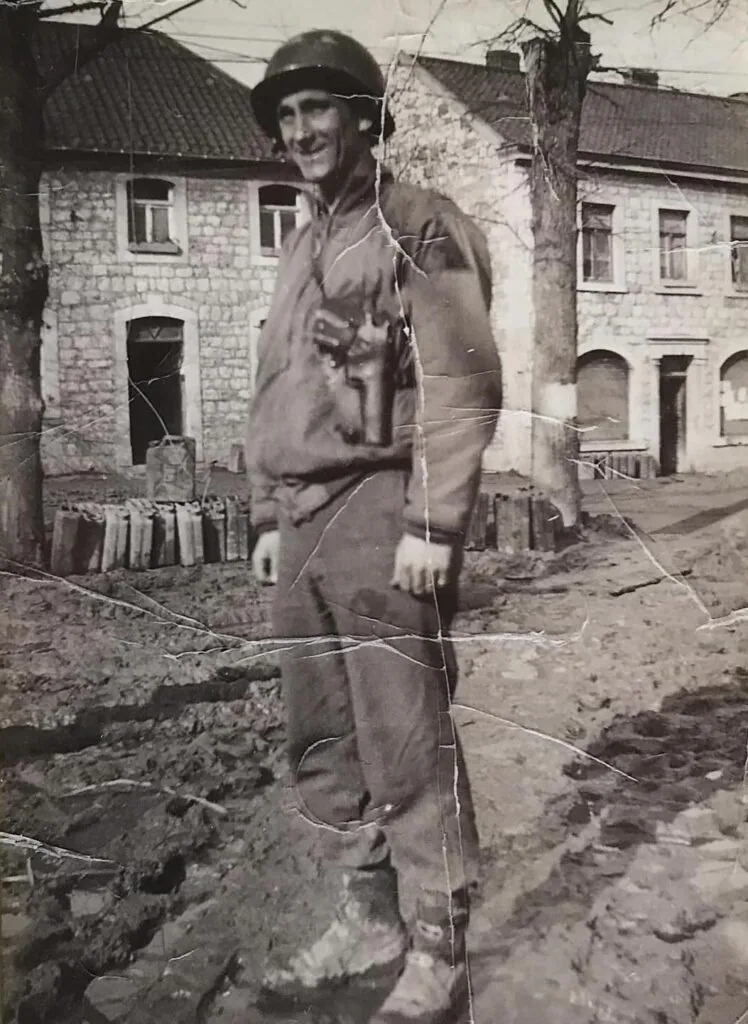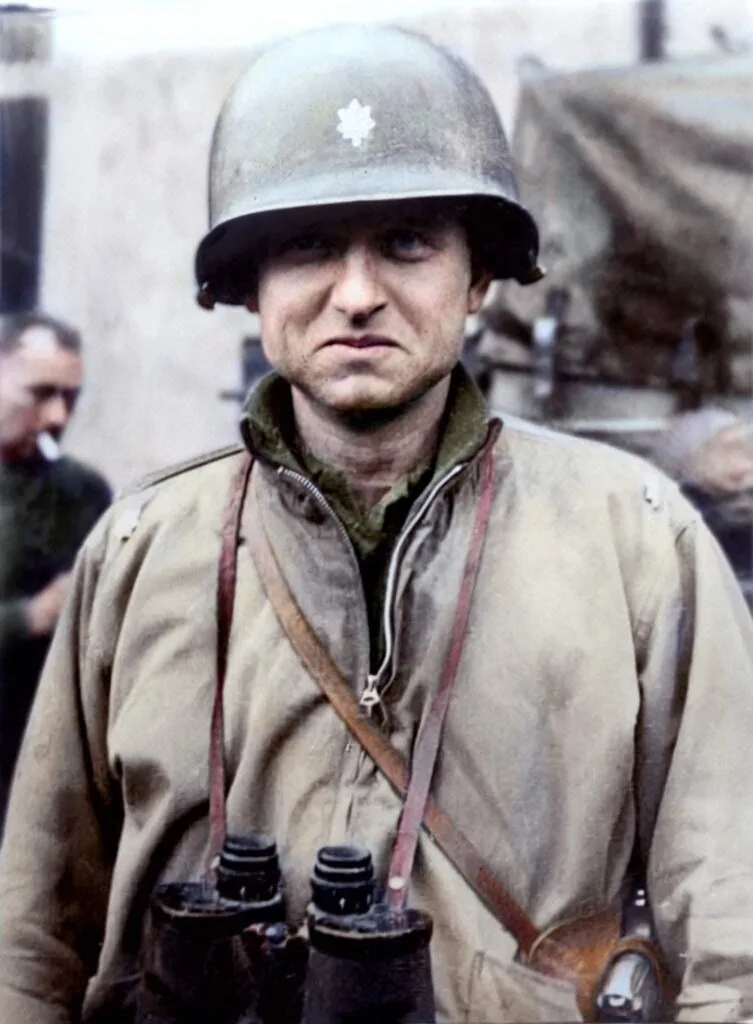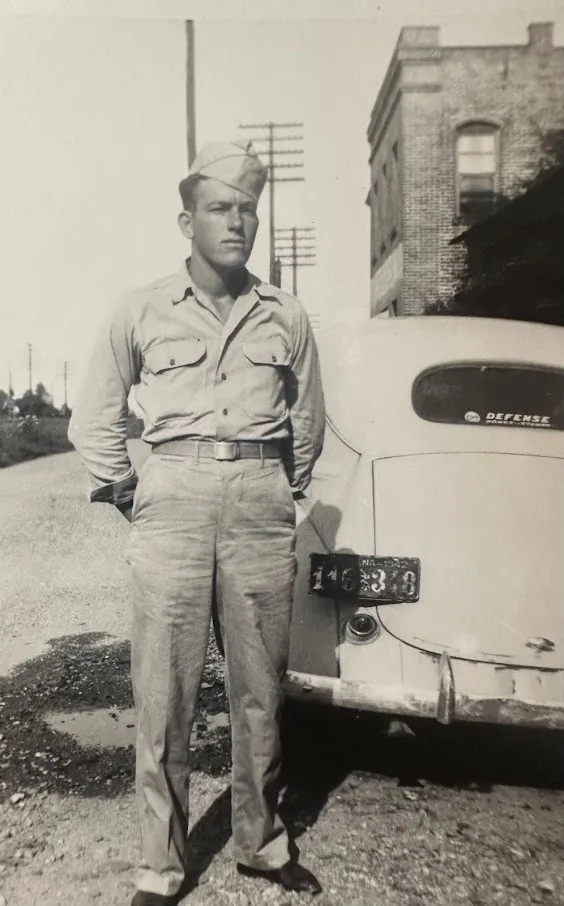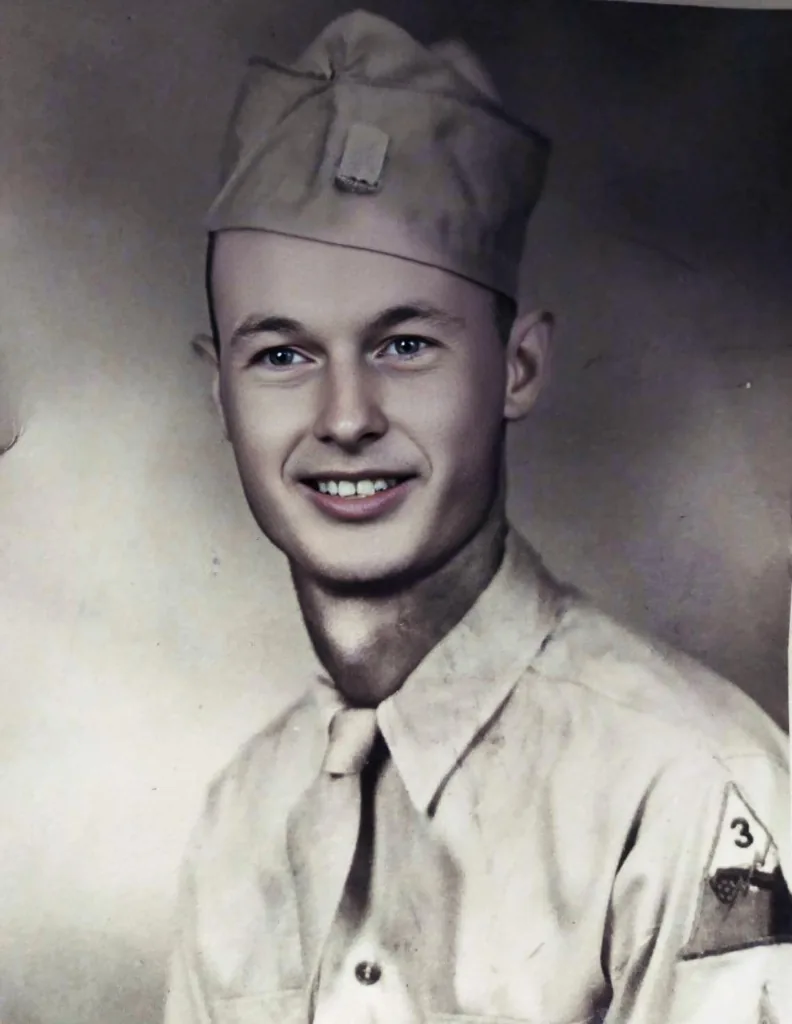
Lee Brenson Porter
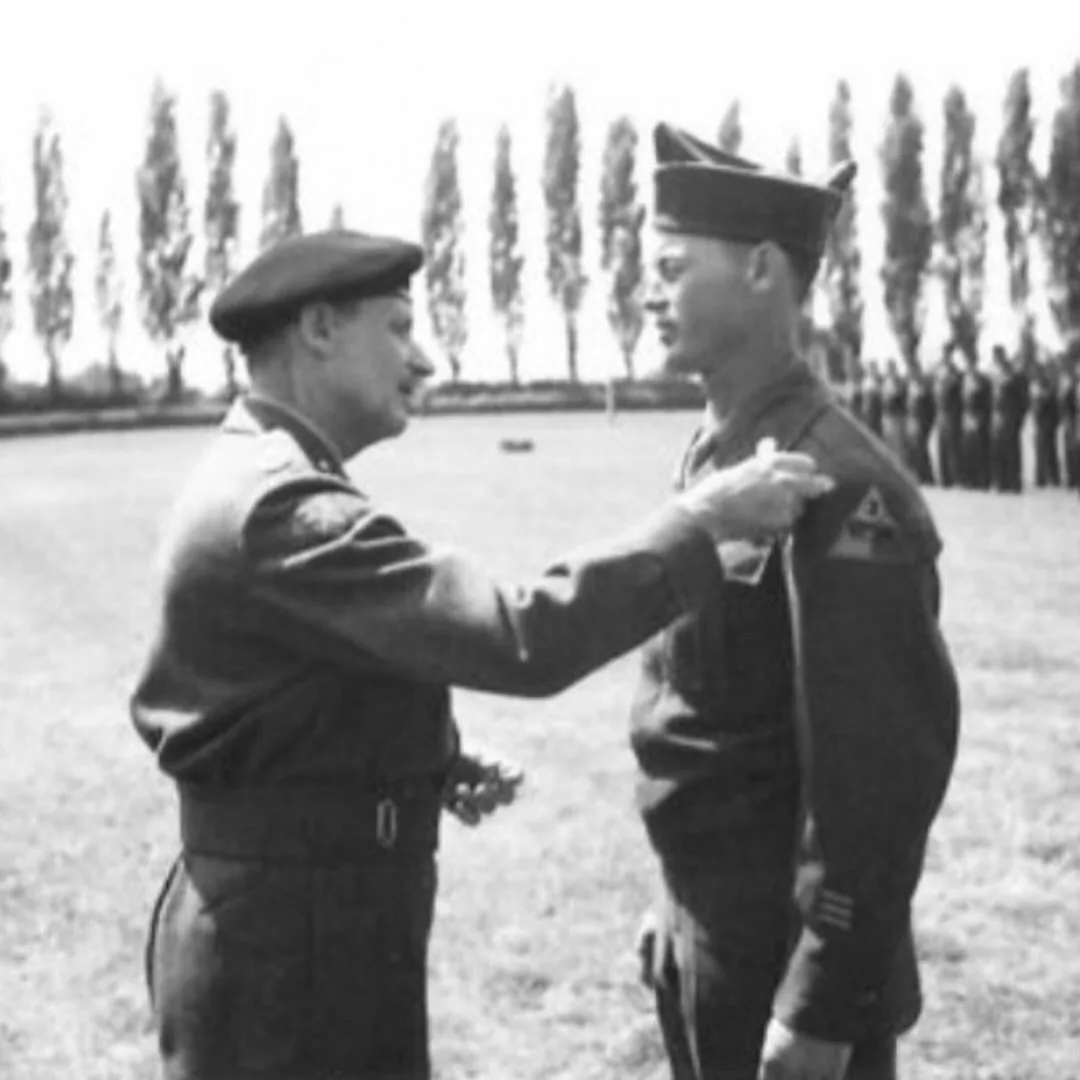
Field Marshal Montgomery decorates Lee Porter · Wiesbaden, June 26, 1945
S/Sgt Lee Brenson Porter
Lee had just celebrated his 27th birthday the same day that TF Hogan, of which he was a member, lost contact with its commander who had left to report in the direction of SOY on December 21, 1944. He would experience, like all the others, the fighting at Beffe and the encirclement of the Task Force in the village of Marcouray.
On the evening of December 25, 1944, after the colonel refused to surrender to the Germans, orders were given to disable all vehicles and tanks still in fighting condition, and to reach American troops 16 km to the north, through enemy lines. Lee was part of the lead group of this escape column. After several hours of stealthy marching in the snow, the group encountered a German sentry.
SGT Lee Brenson Porter independently decided to move away from the column, stealthily approached the sentry and neutralized him with his bayonet. This heroic act saved the entire column from certain capture (or even death — cf. Malmedy massacre). All officers present that evening praised Lee's feat of arms in a citation file for a potential medal.
On June 26, 1945 in Wiesbaden, Germany, the war in Europe over for a month, in the name of His Majesty the King, Field Marshal Montgomery awarded the British medal to Staff Sergeant Lee Brenson Porter of the 83rd Armored Recon Bat. for his heroic act on the night of December 25, 1944, the night of Hogan's 400.
Yet behind the medal, Lee carried a weight that never left him. He was not proud of what he had done that night — not because it was wrong, but because taking a life, even to save 400 comrades, leaves a mark on a man's soul. He did what had to be done, with courage and silence. That burden, borne quietly, is itself a form of honor.
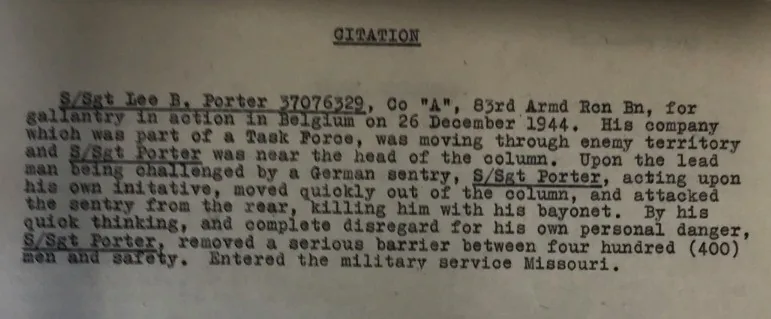
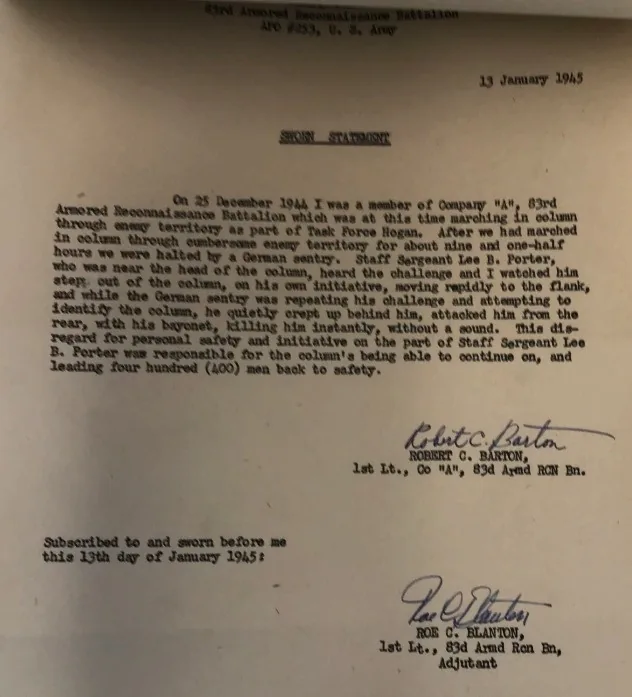
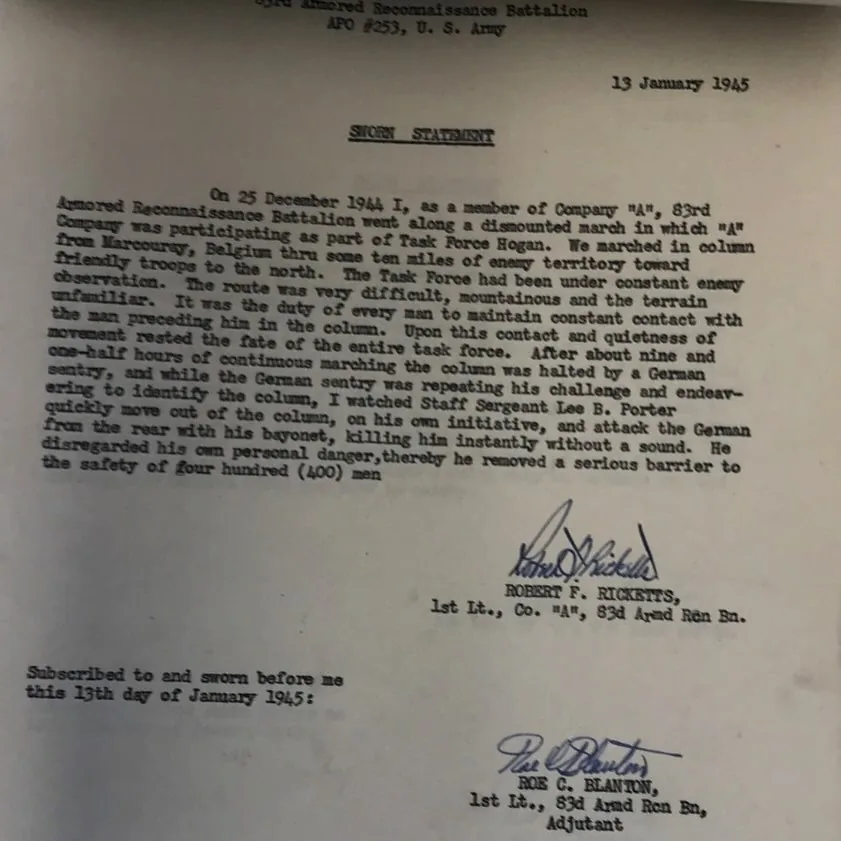
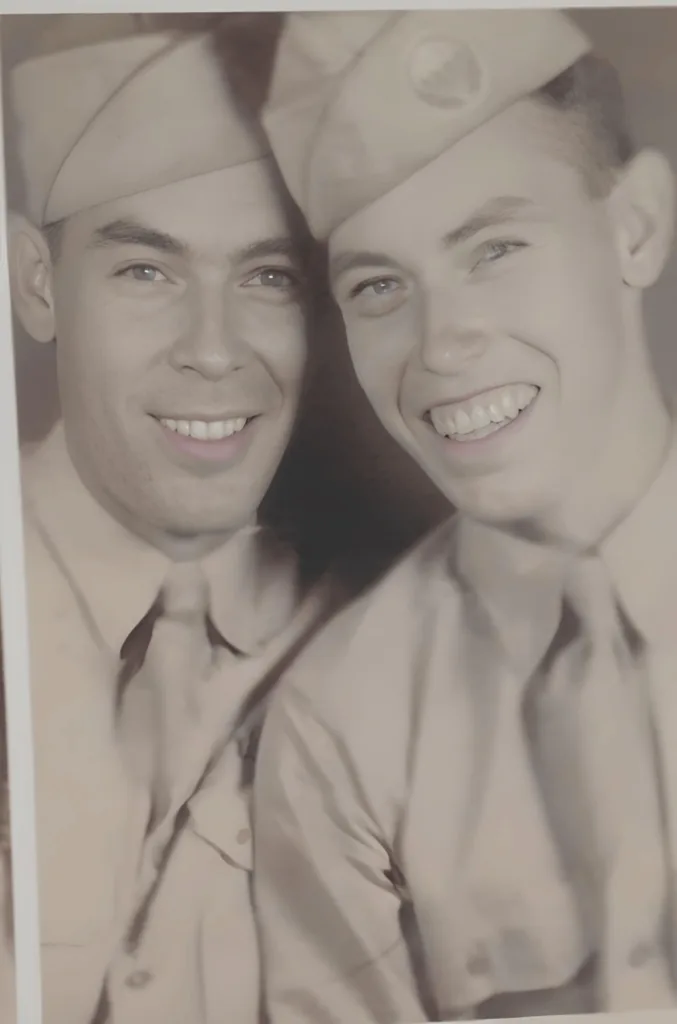
The PORTER Family — A true American military family, the PORTER family can also be proud of the service rendered to the nation by Lee's two brothers. Loyd served in the Medical Corps on the Pacific front against the Japanese Empire; he survived the war. Roy enlisted in the paratroopers of the 17th Airborne; he participated in Operation Varsity in March 1945, where he lost his life.